
In late 2025, something unprecedented happened.
iOS app releases surged 60% year-over-year. Not 6%. Sixty. For three consecutive years prior, the number had been virtually flat. Then agentic coding tools arrived, and the graph went vertical.
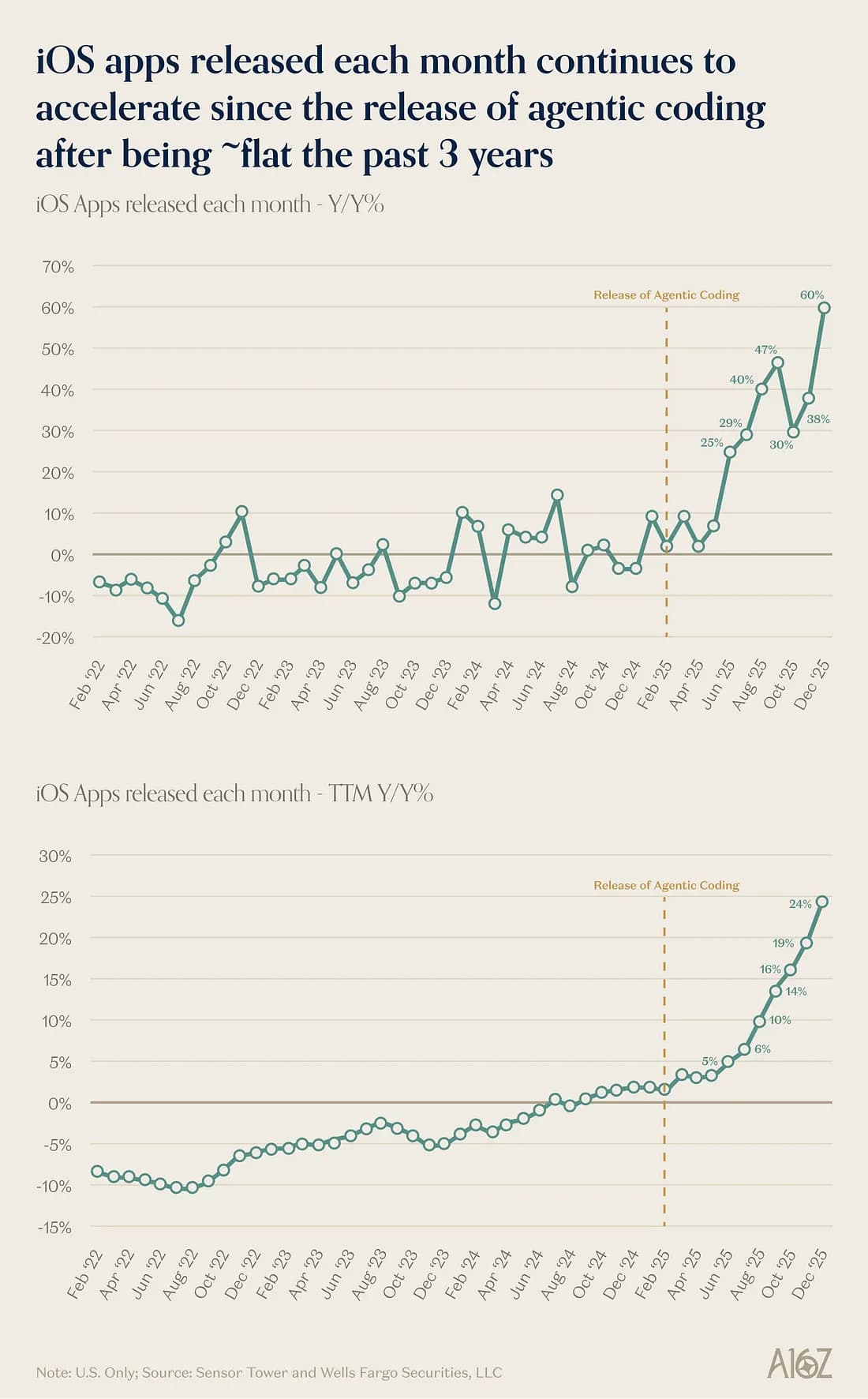
GitHub Copilot now writes 46% of all code for its 20 million users. Developers report completing tasks 55% faster. 90% of Fortune 100 companies have adopted AI coding assistants. The cost of building software has collapsed toward zero.
This is not a prediction. This is the present.
The Collapse of the Building Moat
For decades, the ability to build was the moat. If you could code, you had leverage. If you could ship, you had power. Technical skill was the great differentiator.
That era is over.
Today, a teenager with a laptop can ship a functional SaaS product in a weekend. A solo founder with no engineering background can launch a mobile app before lunch. The tools that once required years of training now require only a clear prompt.
The implications are profound: when everyone can build, building is no longer an advantage.
Consider what this means for competitive dynamics. A thousand apps now compete where ten competed before. Features that once took months can be replicated in days. The technical barriers that protected early movers have evaporated.
In this world, who wins?
The New Rule: Visibility Is the New Equity
The winner is whoever gets seen.
Peter Thiel famously declared that competition is for losers. His argument: in competitive markets, profits converge toward zero. Only monopolies capture sustainable value. The path to monopoly, he argued, is doing something no one else can do.
But when AI can replicate almost any feature, almost any product, almost any technical innovation — what remains that cannot be copied?
Distribution.
NFX's research, spanning three decades of technology companies, found that 70% of all value created in tech since 1994 came from companies with network effects at their core. Not better products. Not superior technology. Network effects — the ability to leverage distribution to create compounding advantages.
Google did not win because it was the best search engine. Google won because it became the default. Facebook did not triumph because it was the best social network. Facebook triumphed because it became where everyone already was.
“Monopoly is the condition of every successful business.”
The Decay of Every Channel (Except One)
Andrew Chen, now a partner at Andreessen Horowitz, articulated what he called The Law of Shitty Clickthroughs: over time, all marketing strategies result in declining returns.
The first banner ad in 1994 had a 78% click-through rate. Today, banner ads average 0.05%. That is a 1,500x decline.
Every marketing channel follows this trajectory. Email open rates decline. Social reach declines. Paid advertising costs increase while returns decrease.
There is one exception.
Organic search. SEO. The practice of being found when people are actively looking. Unlike paid channels, organic visibility compounds. A piece of content that ranks well today can continue generating traffic for years.
The Thesis
I spent over a decade in search. I watched companies rise and fall not because of their products, but because of their visibility. The best products often lost. The most visible products won.
“Visibility is the new equity. Distribution still matters. Credibility is a long-term advantage in high-trust markets.”
Once I understood this, I could not unsee it. And once I could not unsee it, I had to build for it.
The Proof
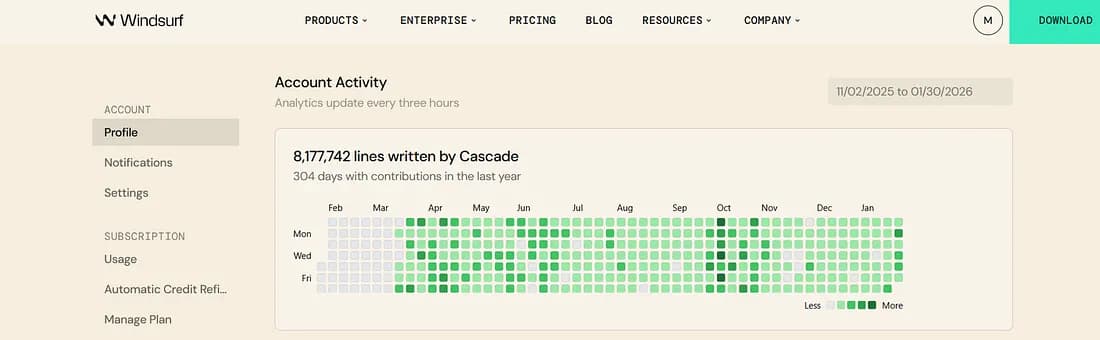
I did not arrive at this thesis theoretically. I built it. In the past year, I have shipped more code than most development teams. Not because I am a better engineer — but because the tools have made engineering nearly free. Building is no longer the bottleneck.
The Question That Matters
Every founder, every creator, every professional now faces the same question:
“The question is no longer ‘can you build it?’ The question is ‘can they find you?’”
If you are optimizing your product instead of your distribution, the most visible competitor will reach your audience first. The war for features is over. AI won. The war for consistent, credible visibility is just beginning.
The tools to build are everywhere. The knowledge to distribute is rare. The execution of distribution is rarer still.
That is why visibility is the new equity. And that is why, in the age of infinite building capacity, distribution is the only moat.